

Venus:
Venus is the second planet from the sun. It is only marginally smaller than the Earth is, however it has a much thicker atmosphere which consists of poisonous gases such as Carbon dioxide and Sulphur, as well as some of the inert gas Nitrogen.
Venus's year lasts 227 Earth days.
It is the brightest object after the moon in the night sky and is called the Morning/ Evening Star as it is brightest just before dawn or just after dusk.

Venus is the hottest planet in the Solar system with a temperature of 460 °C. The temperature is the same all over the planet as the strong greenhouse effect traps and distributes heat all around the planet.
The high temperature and high pressure combined mean that lava on the planet's surface often does not cool for very long periods of time and most volcanoes are relatively flat.
The high levels of greenhouse gases in Venus's atmosphere come from the fact that there is a lot of volcanic activity on the planet.
On February the 12th, 1961, the Soviet's sent the first ever probe to another planet. The chosen destination was Venus and the probe's name Venera I. The Soviets also sent Venera 4, the first probe to relay data from within Venus's atmosphere.
If you would like some more basic info on Venus, Here is the wikipedia link.
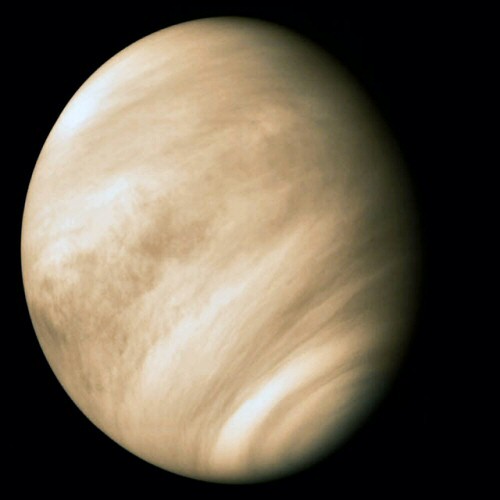
And here is a picture to conclude the days ramblings:


No comments:
Post a Comment